
Tea tree oil naturally tames scalp inflammation and dandruff, delivering a soothing, flake-free foundation for healthier hair.
Alright, let me be real with you—my scalp used to be a chaotic warzone. Flakes flying around like a surprise indoor snowstorm, itchiness that could drive a saint to madness, and hair looking more deflated than a week-old party balloon. I tried everything from coal tar potions to potions that smelled like a chemistry lab exploded on my head. Spoiler: Most of them either nuked my hair into straw or just ghosted me after one wash. Then, in the ever-trending world of 2026 clean beauty, I stumbled back onto a little gem that your grandma’s herbalist might have raved about: tea tree oil. And honey, this stuff is like discovering your scalp had a VIP hotline to Mother Nature all along.
Now, before I start sounding like a late-night infomercial, let me break down what makes this humble essential oil the talk of the town—again. Because yes, even in 2026, with all our fancy scalp serums and laser helmets, tea tree oil remains a solid MVP.
So, What Even Is Tea Tree Oil?
Picture a small, bushy tree chilling in the swampy lowlands of Australia—that’s Melaleuca alternifolia. For centuries, Indigenous Australian communities used its leaves as a Swiss Army knife for coughs, skin woes, and everything in between. Fast forward to 2026, and we’ve basically bottled that ancestral wisdom into a potent essential oil. The secret weapon? A compound called Terpinen-4-ol. Think of Terpinen-4-ol as a team of ultra-disciplined firefighters that swarm into your scalp, calmly extinguishing inflammation and shooing away microbial party crashers without leaving a chemical stench behind. That’s the vibe.
Why Your Scalp Will Beg for Tea Tree Oil
If your scalp could write a love letter, tea tree oil would be the recipient. Here’s why this liquid gold is still undefeated in the hair game:
🦠 The Flake Terminator
Dandruff is mostly caused by a yeast named Malassezia getting way too comfortable on your scalp, throwing a fungi rager. Tea tree oil swoops in like a bouncer who knows exactly how to break up the party without trashing the club. A study that still holds weight in 2026 found that folks using a tea tree oil shampoo saw a 41% improvement in dandruff symptoms. That’s not just a slight tickle of hope—that’s a full-on flake ceasefire. Plus, it tackles the infernal itch that makes you look like you’re audibly debating whether to shave your head.
🧯 Inflammation’s Kryptonite
Scalp inflammation is a sneaky hair-loss villain. Dermatologists like Dr. Marisa Garshick (still quoted in 2026 textbooks, by the way) point to tea tree oil’s antioxidants that help lower inflammatory markers. Imagine your scalp is a trampled garden, and inflammation is a herd of clumsy elephants. Tea tree oil acts like a gentle but persuasive gardener who guides the elephants out, replants the grass, and sets up a peaceful ecosystem. A calm scalp is basically fertile soil for hair follicles to thrive.
⚖️ Oil Production Regulator
Greasy roots by noon? That’s often your scalp overproducing sebum as a cry for help against bacteria or yeast. Tea tree oil gets to the root cause (pun intended) and tells your oil glands, “Chill out, we’ve got this.” The result is hair that doesn’t need a dry shampoo intervention every six hours.
🌱 The Indirect Hair Growth Wizard
Let’s be clear—tea tree oil isn’t a magical hair sprout potion like some mythical beanstalk juice. But by creating a healthy, inflammation-free, flake-free scalp, it sets the stage for new strands to push through like determined seedlings. Dr. Morgan Rabach, another derm queen, emphasizes that a thriving scalp environment lets hair be its healthiest. So think of tea tree oil as the backstage crew that makes the lead singer (a.k.a. your hair) look like a star.
🪲 All-Natural Lice Ninja
Even in 2026, head lice still exist (ugh). Instead of reaching for chemical warfare that smells like something from a post-apocalyptic lab, tea tree oil has shown effectiveness as a holistic delousing treatment. It suffocates the pests and disrupts their egg-hatching ambitions—nature’s own hitman.
| Benefit | How Tea Tree Oil Works | Emoji Vibe |
|---|---|---|
| Dandruff control | Antifungal action against Malassezia yeast | 🧹❄️ |
| Reduces inflammation | Lowers inflammatory markers, antioxidant power | 🚒💧 |
| Regulates oil | Balances sebum production by tackling microbes | ⚖️✨ |
| Supports hair growth | Creates healthy scalp environment | 🌱📈 |
| Lice treatment | Natural insecticidal properties | 🐜🚫 |
How to Actually Use Tea Tree Oil on Your Hair Without Regretting It
I’m not gonna sugarcoat it—pure tea tree oil is potent. Putting it straight on your scalp is like handing a flamethrower to a toddler. You must dilute it. Trust me, your skin will thank you with zero angry red patches.
🧪 Method 1: The Shampoo Booster (Easiest)
Add 2–3 drops of tea tree oil to a dollop of your regular shampoo in your palm. Mix, apply to wet hair, and let it sit for about five minutes while you hum your favorite tune. Rinse thoroughly. Don’t dump the oil straight into the shampoo bottle—if irritation strikes, you’ll have to ditch the whole thing. Start small, observe, then scale up.
💆 Method 2: Scalp Massage Oil (For the Ritual Lovers)
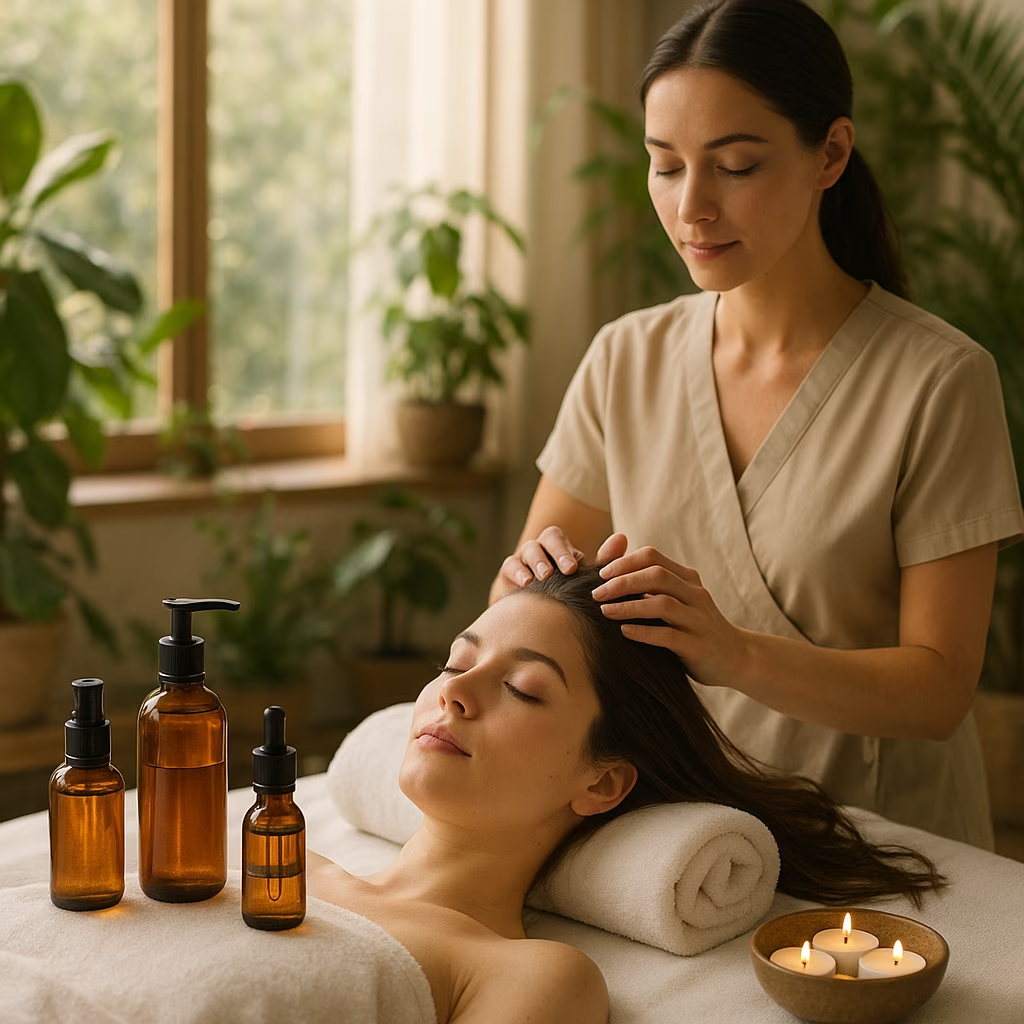
Post-shampoo, while your hair is still damp, mix 2–3 drops of tea tree oil with a tablespoon of a carrier oil like coconut, almond, or jojoba. Use your fingertips to massage it into your scalp with gentle, circular motions. This is like a spa day for your follicles—the massage boosts blood flow (which already helps hair growth), while the tea tree oil gets to work on any lingering issues. Leave it on like a leave-in tonic.
🧖 Method 3: Hair Mask Infusion
Got a favorite deep conditioner? Add a few drops of tea tree oil to it, apply from mid-lengths to scalp, and let it sink in. You’ll tackle dryness and dandruff in one go. It’s like treating your hair to a five-course meal but without the dishes.
🛒 Method 4: Buy Ready-Made Products
If DIY measuring gives you anxiety, no shame. In 2026, countless shampoos and scalp treatments already include tea tree oil in safe, effective concentrations. Dr. Garshick often recommends this route for sensitive souls, because manufacturers have done the math for you.
A Couple of “Wait, Before You Slather” Rules
-
Patch test like your life depends on it. Put a diluted drop on your inner arm and wait 2–3 days. If your skin throws a tantrum (redness, itching), skip it. People allergic to balsam of Peru, eucalyptol, or myrtle-family plants are more likely to react.
-
Less is more. Start with 2–3 times a week. Even if your scalp seems indestructible, don’t go dousing it daily unless a derm tells you otherwise.
-
Carrier oils are your best friends. Think of carrier oils as the diplomatic envoy that introduces tea tree oil to your scalp in a peaceful, non-aggressive manner.
-
If irritation pops up, stop. Your scalp isn’t a training ground for endurance. Pause, consult a doc, and maybe switch to a pre-formulated product.
2026 Real Talk: Is Tea Tree Oil Still Worth the Hype?
Absolutely. In an era where we’re drowning in overpriced serums with unpronounceable ingredients, tea tree oil remains refreshingly honest. It’s like that one friend who still uses a paper map and somehow always gets to the destination first. Its antibacterial, antimicrobial, and anti-inflammatory triple threat isn’t going out of style.
And here’s a final metaphor for you: Using tea tree oil on your scalp is like setting up an intelligent home security system—it filters out the genuine threats (yeast, bacteria, inflammation) while letting the peaceful residents (your hair follicles) live their best lives. No toxicity, no drama.
So, whether you’re battling the snowfall of dandruff, trying to calm an itchy flare-up, or just wanting your hair to look like it belongs in a slow-motion commercial, give this Aussie elixir a crack. In 2026, my scalp has never been happier, and honestly? My hair’s got that "I woke up like this" energy without the fake fluff.
FAQ Quickies
Can I use tea tree oil every day?
If you're mixing it into shampoo, start with 2–3 times a week. Overdoing it can dry out your scalp. Pre-made tea tree shampoos are often gentle enough for daily use, but keep an eye out for irritation.
Does tea tree oil actually help hair grow faster?
It’s an indirect cheerleader, not a sprinter. By clearing scalp conditions and reducing inflammation, it fosters a healthy environment where hair can grow optimally. Think of it as preparing the soil—not injecting the plant with growth hormones.
What if I have sensitive skin?
Dilute extra thoroughly and patch test religiously. Some folks with sensitive skin tolerate it just fine; others don’t. Your body, your rules. Listen to it.
Now, if you’ll excuse me, I’m off to massage my scalp and pretend I’m in a rainforest oasis. Cheers to happy hair in 2026! 🌿