
Fine hair volume tips reveal a smart routine of rough-drying, light products, and strategic heat for fuller, lasting lift.
In 2026, I finally stopped declaring war on my fine hair. For years, I treated every mirror like a courtroom and every flat root like a verdict against me. My hair was as flat as a pressed flower in a dictionary, and my attempts at volume felt like trying to stack cotton candy into a cathedral. Then I spent a few weeks collecting advice from hairstylists and testing it on my own very ordinary, very fine strands. What I learned is that volume is less about one miracle product and more about a sequence: prep, product placement, heat, and patience.
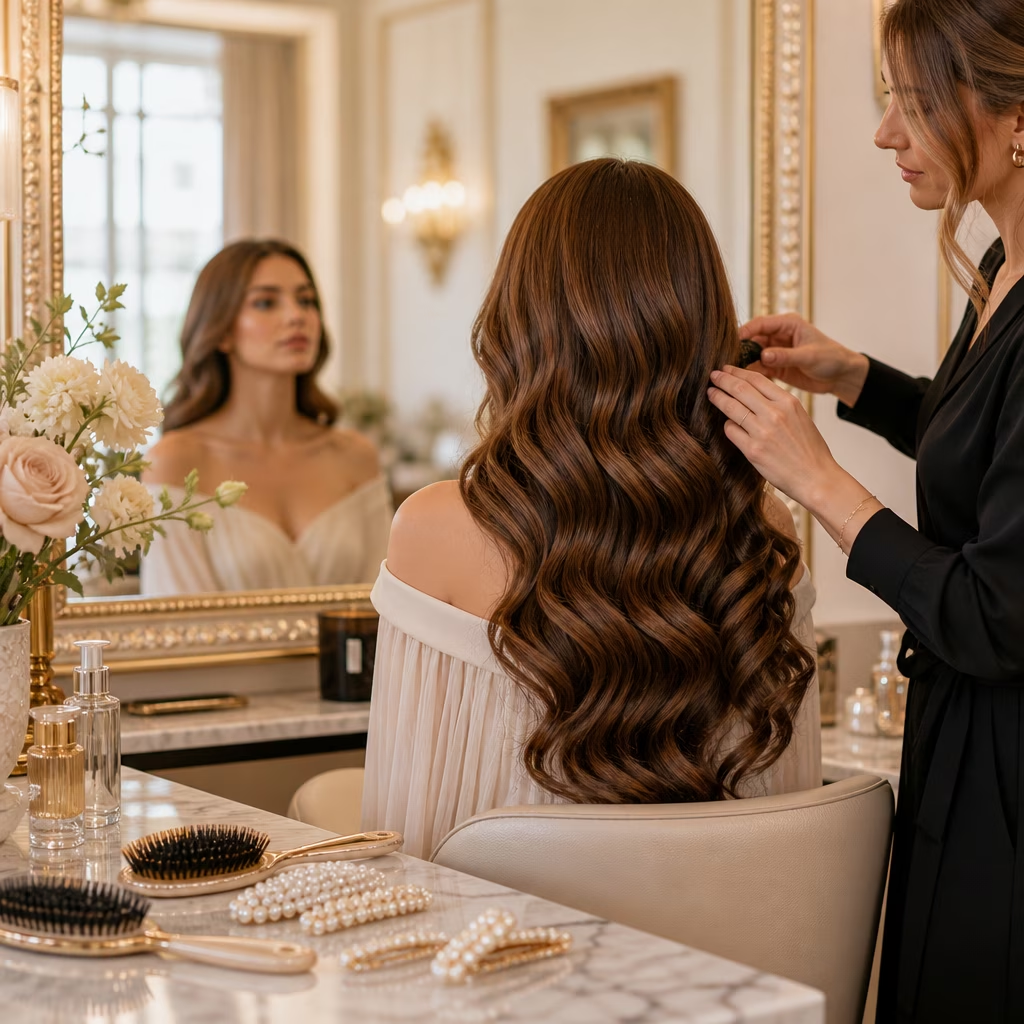
The first revelation was rough-drying. I used to attack damp hair with a round brush immediately, which made my hair look limper instead of fuller. One stylist told me the biggest mistake people with fine hair make is not rough-drying before styling. Now I dry my hair at least 90 percent with my hands before I touch a round brush. But rough does not mean violent. I rake sections with my fingers and lightly tug upward at the roots, letting the dryer nozzle point toward the roots and move around instead of blasting one spot. That gentle lift makes a real difference, and it keeps my ends from snapping.
Then came products. I built a small kit: a lightweight root-lift spray, dry shampoo, matte pomade, sea-salt spray, and a thickening spray. I do not use all of them at once. I choose based on the day and the style I want. Product placement changed everything. I used to dump product near my roots and wonder why my hair collapsed by lunch. Now I start at the ends and work upward, because ends absorb more and roots need breathing room. The only product I put near my roots is a root-volume spray. Less is more, and I build gradually because too much product is almost impossible to undo.
| Step | What I do | Why it works |
|---|---|---|
| 1 | Rough-dry to 90 percent with hands | Too much early brushwork makes fine hair limp |
| 2 | Apply product from ends upward | Roots stay light instead of weighed down |
| 3 | Use dry shampoo on bangs and roots | Adds grit and stops piecey separation |
| 4 | Dry fully before hot tools | Locks in volume and texture |
| 5 | Finish with cool air and fingers | Loosens curls without frizz |
Conditioner was another plot twist. I avoided it, then overused it. Now I use conditioner only on my ends and only every other wash. Fine hair that breaks easily still needs moisture, but over-conditioning can flatten everything. I rinse thoroughly until no slippery trace remains.
Dry shampoo is my emergency exit. A little spritz keeps my bangs from separating and looking thin and wispy. Even on wash days, I keep a bottle nearby because clean hair can look piecey too. For second-day hair, I keep a spray bottle of water on hand. I mist limp areas, add root-lift spray, rough-dry with my hands, then smooth the face-framing pieces forward with a round brush. I flip my head back, spray all over, and if my hair still looks too separated, I add dry shampoo at the roots, wait a few minutes, and comb it through with my fingers. The result looks freshly blown out without a full shower.
Hot tools only touch my hair when it is 100 percent dry. Waves on fine hair can be tricky, and rushing the process is like coaxing a soufflé to rise in a thunderstorm. Foam rollers are old-school but excellent. I put a few at my crown while I have coffee or do my makeup, using them on almost-dry hair. I remove them right before I leave and fluff the roots with my fingers instead of a brush, which keeps the curl loose and avoids frizz.
For a cut that supports volume, I ask for light layers. Long layers add movement without chopping away too much weight. Shorter cuts also work well because they are not weighed down, and a blunt collarbone-length cut with a few face-framing layers is a strong option. Bangs are allowed too, no matter what anyone says. Volumizing shampoo helps remove buildup and leaves hair feeling light. Finally, I blow-dry upside down so the hair dries in that lifted direction; when I flip right side up, the volume is already there.
My fine hair is still fine. It still collapses in humidity and still needs a little help. But I no longer see it as a lost cause. With the right order, the right amount of product, and a gentler hand, I can turn my flat strands into something big and bouncy. The trick was never to fight my hair harder. It was to stop piling everything on top of it and start building from the ends up. 😊