
French hair in 2026 favors low-maintenance routines: skip daily washing, air-dry, use sulfate-free products, choose natural color.
In 2026, French hair still carries an almost mythic status. From Françoise Hardy's on-point curtain bangs and Brigitte Bardot's tousled bouffant to Tina Kunakey's cascading curls, France has produced some of the world's most referenced hair icons. Yet the secret behind that polished, undone look is not magic: it is a deliberately low-maintenance routine built on timing, product choice, and restraint. Hair colorist Christophe Robin and stylish French women Rachel Jucaud and Caroline de Maigret recently shared their insights into how French women approach washing, drying, coloring, cutting, and caring for their hair.
Skip the Daily Wash
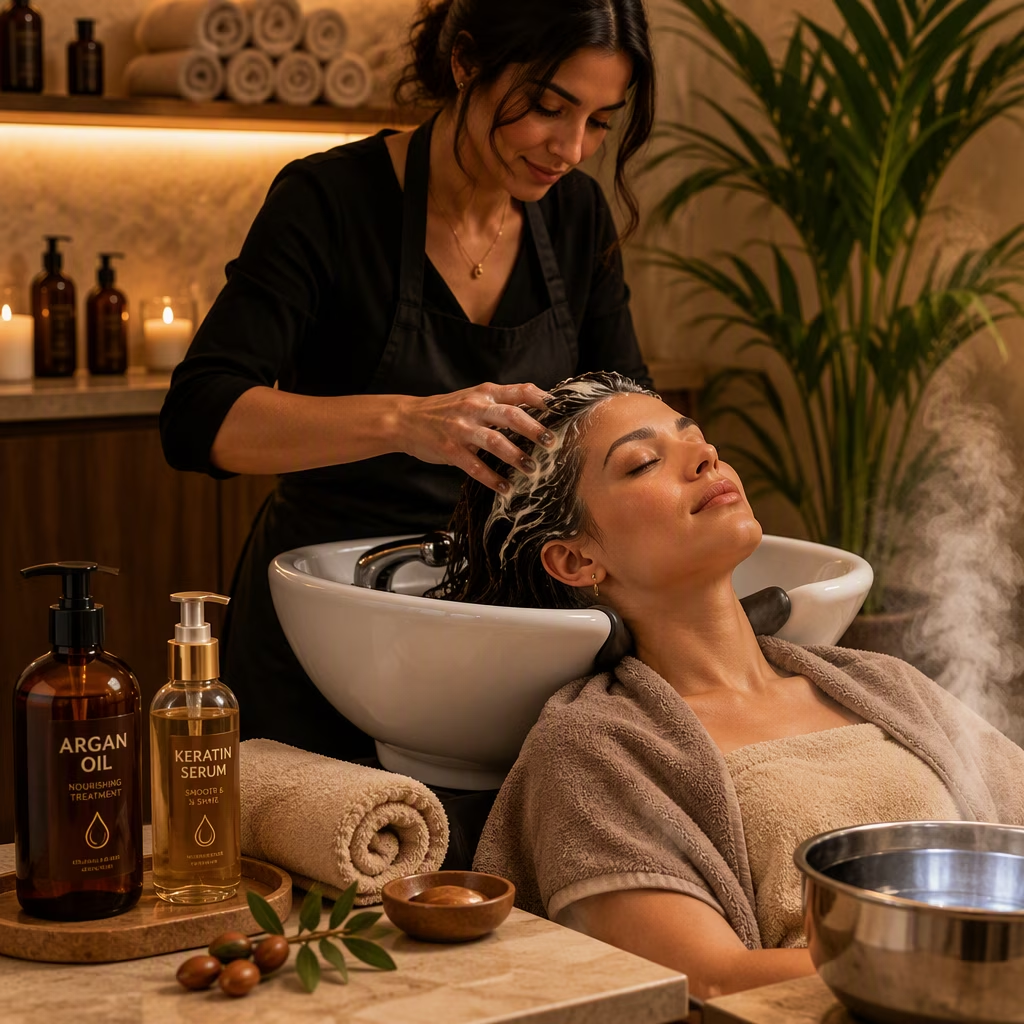
The first rule is as much about what not to do as what to do. French women generally avoid washing their hair every day. De Maigret explains that hair often looks better on the second day, when it gains a little weight and therefore holds a bun with more volume. When a wash is necessary, Jucaud relies on a quick routine: shampoo, apply a leave-in conditioner, rough-dry the roots with her fingers, and wrap the strands loosely in a bun. She releases the hair once it is dry, often right before arriving at work or a social event, which creates soft waves without heat styling. Jucaud says she never leaves her hair bare after a shower. A light smoothing product or leave-in conditioner is always involved, and she favors Kérastase’s Nectar Thermique Cream because it does not feel oily or heavy.
Put Down the Hot Tools
Air drying is practically a rule in the French hair playbook. De Maigret advises skipping the hair dryer entirely and notes that a flat iron is equally unnecessary. Instead of heat, she suggests using fresh air in summer and a towel in winter. This approach preserves hair health over time and reinforces the natural texture that underpins the French look. For women who struggle with air drying, a little patience and a loose bun can go a long way.
Choose Gentle, Sulfate-Free Products
French women treat their hair more like a favorite cashmere sweater than something to be aggressively scrubbed. Robin notes that his clients prefer gentle formulas free of silicones and sulfates. He points to his Cleansing Mask, which has a 20-year-old formula and was one of the first non-lathering shampoos. The product may require a little more effort, but it helps keep hair color intact while nourishing both the hair and scalp.
Keep Color Natural and Low Maintenance
When Robin was asked about the biggest difference between French and American hair habits, he did not point to a styling trick. Instead, he said it was the way women choose hair color. French women tend to select natural-looking shades that flatter their complexion and eye color, and they prioritize low-maintenance color. They do not want to be trapped into constant root touch-ups. Many brunettes in France who go lighter will not bleach the roots; they layer blond only at the ends. Robin calls it the kind of blond that forces respect. De Maigret goes further, recommending little to no dye and, if coloring is needed, using a shade close to one's original color to enhance it or hide gray. American beauty trends such as balayage, ombré, and tortoiseshell hair have moved in this direction, but French women have embraced it for years.
Cut Often and Consider Fringe
Regular trims are another pillar. Robin says French girls are not scared to cut their hair and will do almost anything to protect hair quality. He cites French muses like Inès de la Fressange and Laetitia Casta as examples. Jucaud agrees, saying she cuts her hair just a bit but often to keep it healthy, because any style looks better on healthy hair. Robin also adds that long fringe is a final step toward a truly French finish.
Prep on the Weekend, Relax During the Week
French women may appear to spend less time on their hair during the workweek, but Robin explains that much of the effort happens on weekends. His clients often sleep with an overnight oil treatment, rinse it out in the morning with a non-lathering shampoo, and then apply another mask. After rinsing, they spritz with a hair tonic or light leave-in treatment. This weekend reset lets them enjoy healthy, easy hair for the next few days.
Accessories and Perfume: The Final Touches
Hair accessories have returned in the United States, but de Maigret is not enthusiastic about the trend. Still, a scrunchie or claw clip can be useful for air drying and preserving style. The more universally French final touch is perfume: de Maigret suggests a small amount of fragrance on the hair, behind the ear, or on the nape of the neck.
Quick Reference
| Do | Don't |
|---|---|
| Wash less often | Shampoo daily |
| Use leave-in conditioner | Overuse heat tools |
| Choose sulfate-free formulas | Use silicone-heavy products |
| Opt for natural root color | Chase high-maintenance dye |
| Trim regularly | Avoid cuts out of fear |
| Do a weekly oil or mask treatment | Spend hours styling daily |
| Add a light hair perfume | Rely on heavy accessories |
By following these principles, women outside France can capture a version of that lived-in, healthy, and seemingly effortless style. The French approach is not about doing nothing; it is about doing the right things in advance and then allowing the hair to look like itself.