
Natural hair masks with coconut oil, milk, honey, and avocado revive dry, brittle hair — stylist-approved.
In the spring of 2026, the beauty world looked nothing like it had a decade earlier. Salons became quieter, smart mirrors analyzed hair porosity in seconds, and yet the most effective fix for dry, brittle hair hid in plain sight — inside refrigerator doors and dusty pantry shelves. Maya, a graphic designer with chronically dehydrated curls, had almost abandoned hope after a stylist’s chair confession: her ends were snapping faster than they could grow. That evening, she found herself scrolling past countless product launches until she stumbled onto something far older than any algorithm. It was the whispered wisdom of professional hairstylist Amy Abramite and certified trichologist Gretchen Friese, two voices who insisted that healing could smell like bananas, olive oil, and even leftover yogurt.
Nothing about dealing with lackluster, breakage-prone hair ever felt playful, yet Maya discovered a kind of childlike experimentation in the recipes. The first mask she tried came from a jar of coconut oil she already owned. Abramite had described it as a natural beauty powerhouse, perfect for softening thick, thirsty strands. The method felt ritualistic: rubbing a tablespoon of solid oil between her palms until it melted, then working it through mid-shafts with a wide-toothed comb. For ten minutes before a shampoo, it acted as a strengthening pre-treatment. When she dared to use it after washing in place of conditioner, the frizz that normally engulfed her shoulders simply gave up. “Coconut oil has an antimicrobial effect when rubbed directly on the scalp,” Abramite had noted, “which helps fight dandruff.” Maya, who battled occasional flakes, finally understood why palmfuls of this lauric-acid-rich ingredient had been passed down through generations.
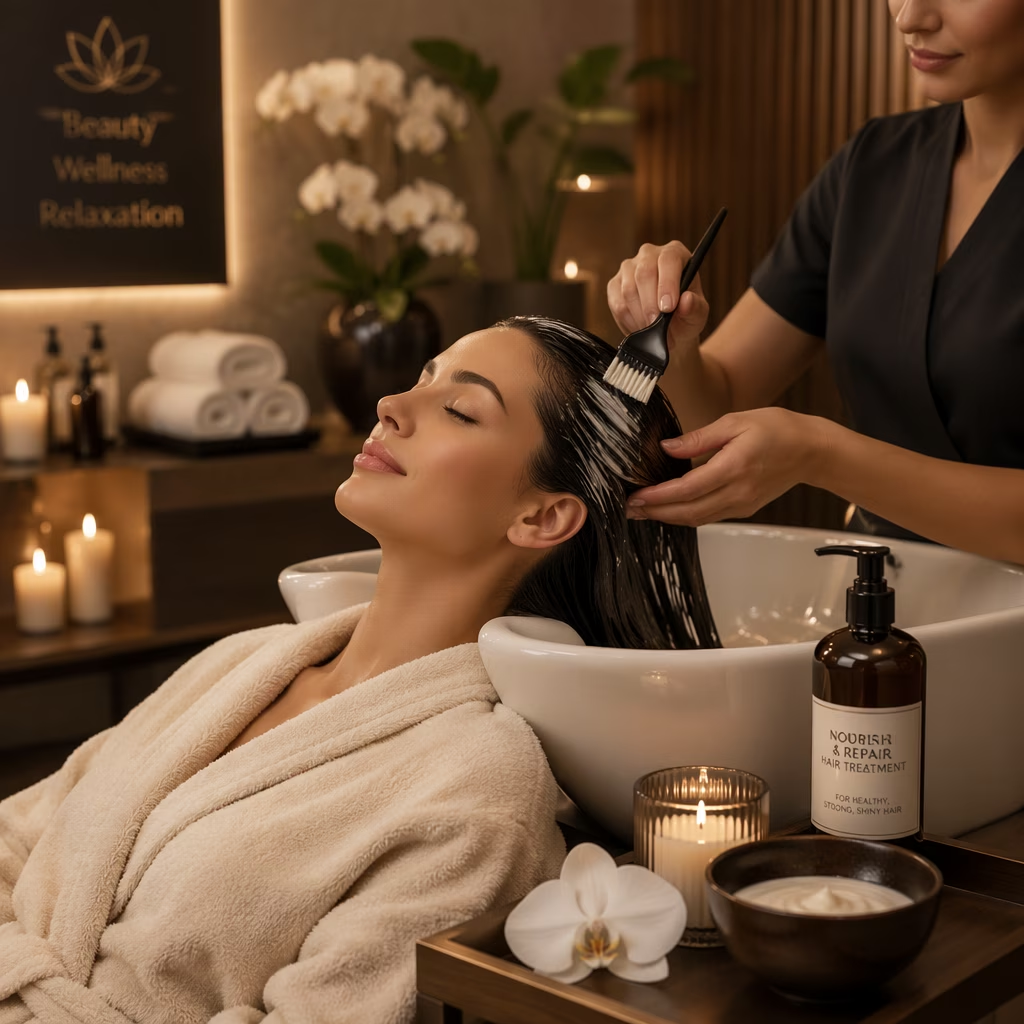
Soon her kitchen became a laboratory. For her friend Lena, who wore fine hair that collapsed under heavy products, Maya blended a spray-bottle mask of one cup of milk and a tablespoon of honey. The combination felt absurdly simple. Yet Abramite’s explanation rang true: honey delivers keratin to fortify weak spots, while milk pours in proteins, amino acids, vitamin B12, iron, and zinc. Lena misted the mixture onto shampooed hair and left it for twenty minutes. When she rinsed, her strands caught the afternoon light with a smoothness no serum had ever achieved.
Those with split ends found their temporary salvation in a creamy avocado and olive oil paste. Maya recalled Abramite’s warning that nothing truly mends separated cuticles — only scissors can — but the mask could make damaged hair look healthy in the meantime. The minerals in avocado sealed the cuticle; the olive oil added a gloss that coated every fracture. Half an avocado mashed with a half cup of olive oil, left on ends for thirty minutes, became a Sunday ritual for Maya’s sister, who swore her highlights looked fresher after each session.
Friese’s insights brought attention to the scalp itself. One morning, Maya cracked an egg yolk over a bowl, remembering how vitamins A and E, biotin, and folate could infuse roots with resilience. She massaged it into dry hair and waited a full hour before rinsing with cold water — hot water, she chuckled, would have scrambled the egg right onto her head. The result was a surprising softness that lasted through several washes. When buildup from dry shampoo became obvious, a clarifying mask of egg white and lemon juice stripped away the residue and balanced her scalp’s pH, leaving behind only a faint citrus freshness instead of any lingering sulfur.
Fermented traditions also resurfaced. Rice water, which had exploded on social media years before, appeared in Maya’s rotation not alone but combined with a conditioning avocado mash. Soaking one cup of rinsed rice for twenty-four hours and blending it with the fruit’s natural fats countered the starchy crunch rice proteins could leave behind. The mask nourished her curls with folate, vitamins C, B, and E, and inositol, restoring bounce that had been missing since winter. Meanwhile, a cooled steep of green tea leaves sprayed onto her scalp slowed the seasonal shedding she dreaded, thanks to antioxidants that fought free radicals.
The pantry oddities proved just as valuable. A paste of baking soda and water exfoliated her scalp without a single gritty complaint, dislodging dead cells and rebalancing pH. When itchiness struck, brown sugar granules suspended in coconut oil scrubbed away flakes while the oil penetrated follicles to stimulate growth. Even mayonnaise, a condiment she usually reserved for sandwiches, became a surprising solo mask that left hair glossy and touched-soft. Friese had explained that its blend of oils coated strands, making Maya giggle at the thought of her hair essentially being dressed like a salad.
By midsummer, Maya’s bathroom cabinets were emptier, but her hair had transformed. She understood that no mask reversed damage overnight; patience was the unseen ingredient in every recipe. But as she stood in front of her mirror, running fingers through ends that no longer snapped, she realized the seventeen DIY compilations she had collected were more than a trend. They were a map back to a time when care lived close to the earth — in coconuts, eggs, honey, and yogurt — and every kitchen held the power to nurse hair into its best shape ever.